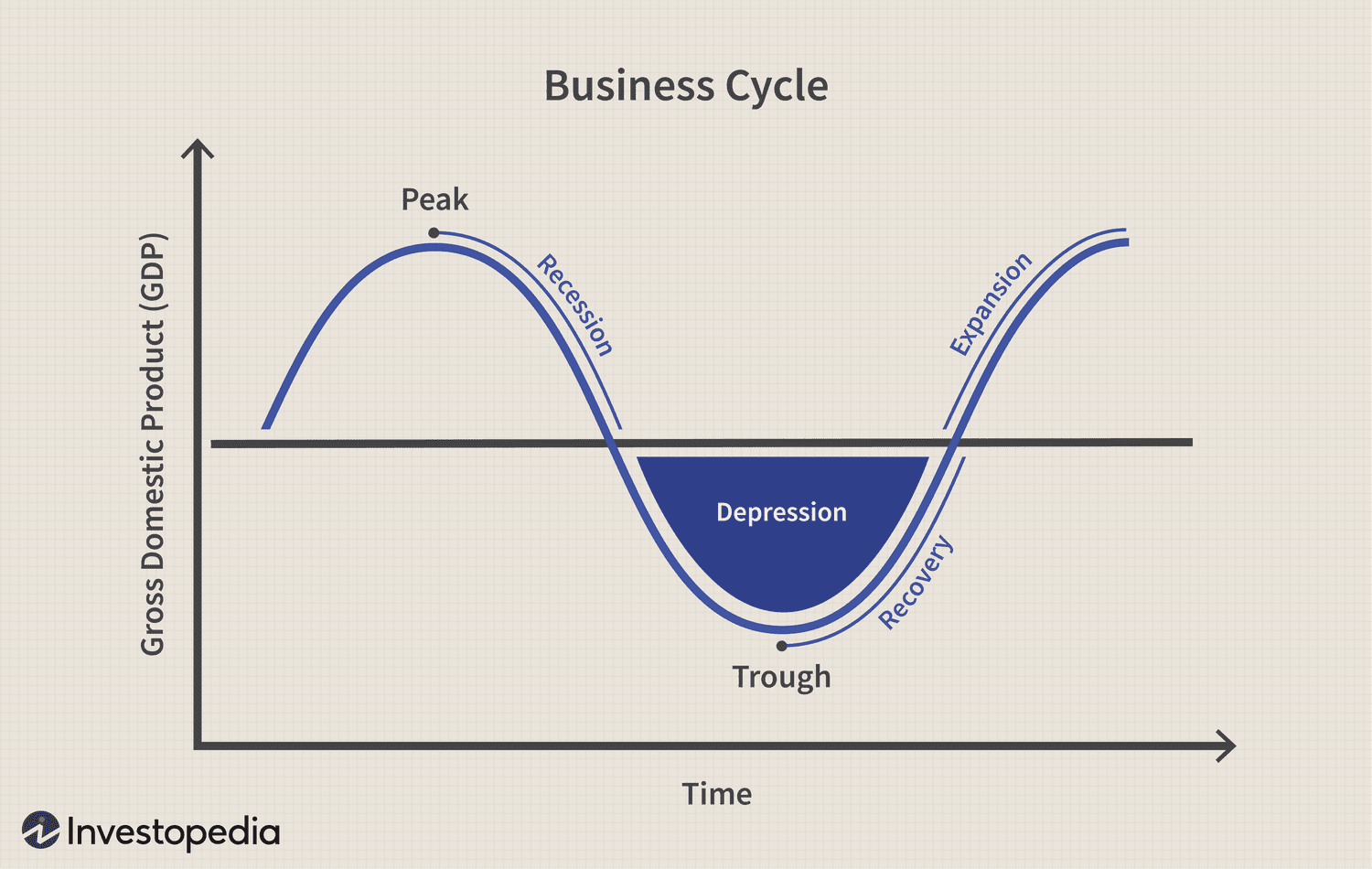
Economic cycles plays a vital role on the construction industry when it comes to development. Economic cycles, also known as business cycles, refer to the fluctuations in economic activity, typically involving periods of expansion and contraction. Let’s explore how economic cycles affect the construction industry and how investors can maximize profits.
Economic Cycles and Construction:
- Expansion phase: During economic growth, construction demand increases, driving up prices and profits.
- Peak phase: Construction activity peaks, and prices stabilize or decline.
- Contraction phase: Economic downturn reduces construction demand, leading to decreased prices and profits.
- Trough phase: Construction activity bottoms out, and prices stabilize or increase.
Serving for Profit:
Understanding economic cycles helps construction companies and investors:
- Time investments: Invest during downturns and harvest during expansions.
- Diversify portfolios: Spread investments across different sectors and geographies.
- Manage risk: Anticipate and prepare for economic shifts.
- Capitalize on opportunities: Identify and seize opportunities during transitions.
Maximizing Profit for Investors:
To maximize profits, investors should:
- Monitor economic indicators: Track GDP, interest rates, and inflation.
- Diversify investments: Spread risk across different asset classes and sectors.
- Focus on value-added services: Offer services like maintenance, repair, and refurbishment.
- Build strategic partnerships: Collaborate with contractors, architects, and suppliers.
- Stay agile: Adapt quickly to changing economic conditions.
Strategies for Different Cycles:
- Expansion phase: Invest in new projects, expand capacity, and innovate.
- Peak phase: Consolidate gains, reduce debt, and prepare for downturn.
- Contraction phase: Focus on maintenance, repair, and refurbishment.
- Trough phase: Look for opportunities to invest in distressed assets.
By understanding and navigating economic cycles, construction companies and investors can maximize profits, manage risk, and build long-term success.
Categories: